
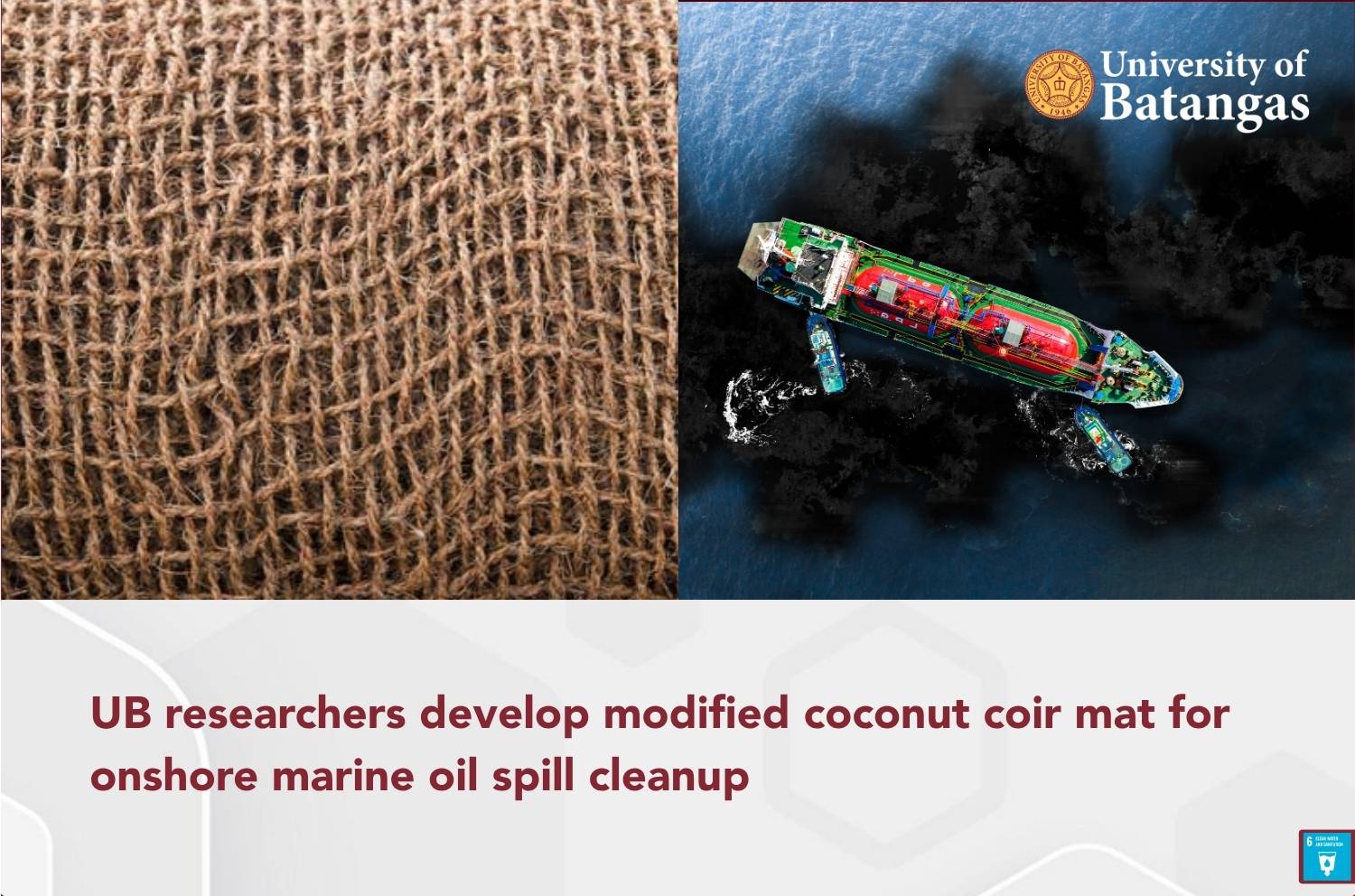
Researchers from the University of Batangas Senior High School Department have developed a Modified Coconut Coir Mat (MCCM) as an eco-friendly absorbent designed to mitigate onshore marine oil spills in Batangas City. The study highlights the mat’s strong potential as a sustainable alternative to synthetic sorbents, reinforcing the university’s commitment to environmental protection and water quality conservation.
The research team—Cherrie Ann A. Bayato, Jed Christian P. Bugay, Ken Alfred S. Etcoy, and Christian Joseph D. Eusebio—enhanced natural coconut coir fibers through sodium hydroxide (NaOH) treatment and incorporated sawdust and charcoal to increase the material’s oil retention and holding capacities. The researchers tested the MCCM using a correlational research design and gathered evaluation responses from marine cleanup teams.
Results show that the MCCM performed reliably in retaining oil, maintaining structural integrity, and reducing leakage during cleanup operations. Respondents strongly agreed that the enhanced mat functions as a cost-effective, durable, and efficient tool for oil absorption—particularly in onshore areas affected by spills. Statistical analysis also confirmed a significant relationship between challenges encountered in real-world cleanup operations and the mat’s demonstrated effectiveness.
The researchers emphasized the urgency of developing affordable and sustainable cleanup solutions, especially in coastal communities frequently affected by maritime accidents. By using coconut coir—an abundant agricultural byproduct—the MCCM reduces waste and offers a natural alternative to petroleum-based sorbents.
The study recommends further field testing, improvements in fiber structure, and additional material optimization to strengthen the MCCM’s oil absorption capabilities. The researchers also propose the development of oil recovery strategies and environmentally responsible disposal methods for used mats.